TPW Magazine: Digital Fishing Issue

January 25th, 2012


This is Passport to Texas

If you fancy yourself a fisherman, or think it’s time you found out what all the fuss is about, Texas Parks and Wildlife magazine has a treat this February. Editor, Louie Bond explains.

60—You know, we’re really excited this February to offer our readers something new and different.

We’ve cut down to ten issues this year, but to replace those two printed issues, we have two new digital guides, and the first one is coming out this month, and it will be all about fishing. And, unlike our usual print issue, which combines a variety of articles on different topics, this is all about fishing and is available only online.

And, we’re excited to have Steve Lightfoot writing a fishing forecast for us for the first time this year. Especially with the drought this year, we wonder what are our local fishing holes going to be like. And Steve looks at the positive side of drought, which—believe it or not—there’s quite a positive side for many anglers; there might be some really great fish caught this year.

We’re also taking a look at underwater structure, which attracts a lot of great fish, and we’ll also have some handy tips on how to avoid bringing those nasty invasive plants to your local lake and fouling it up for future fishing.

So, this is the beginning of a new tradition for Texas Parks and Wildlife magazine. We hope everybody will check in on the fishing guide this month, and then back again in the fall for our hunting guide.

Louie says the online digital guide is accessible to everyone.

The Sport Fish restoration program supports our series with funds from your purchase of fishing and hunting equipment and motor boat fuel.

For Texas Parks and Wildlife…I’m Cecilia Nasti.

State Parks: Hiking at Meridian State Park

January 24th, 2012


This is Passport to Texas

Now that the weather has cooled folks visiting state parks can do what they like best—take a hike. Bryan Frazier suggests hikers stretch their legs on the refurbished trails of Meridian State Park.

60— Hiking is the most popular activity that people seek out in a park. And Meridian State Park had the AmeriCorps crew out there to develop the trails.

They’ve got a nice granite surface—they’ve cleared the overhead, so it’s a lot easier and a lot more accessible. They’ve got 500 yards of this trail that are paved and ADA accessible. And it just happens to coincide with some of the best places to see the endangered Golden Cheeked warbler. Almost all the sightings are right in and around that paved area because of the location there.

So, I think that’s a bonus.

But, you know, Meridian State Park is another CCC [Civilian Conservation Corps] built park; it dates back to the 1930s. A lot of the trails are in primitive back country areas—there’s a master plan to renovate all the areas of the trail.

So check out Meridian State Park. It’s up near the town of Meridian–Northwest of Waco when you get up near the Granbury area–it’s not too terribly far from there; come back toward the Fort Worth area. It’s right in through there in Meridian.

Thanks Bryan.

That’s our show for today…with funding provided by Chevrolet, supporting outdoor recreation in Texas; because there’s life to be done.

For Texas Parks and Wildlife I’m Cecilia Nasti.

TPW TV: Big Horn Sheep Restoration

January 23rd, 2012


This is Passport to Texas

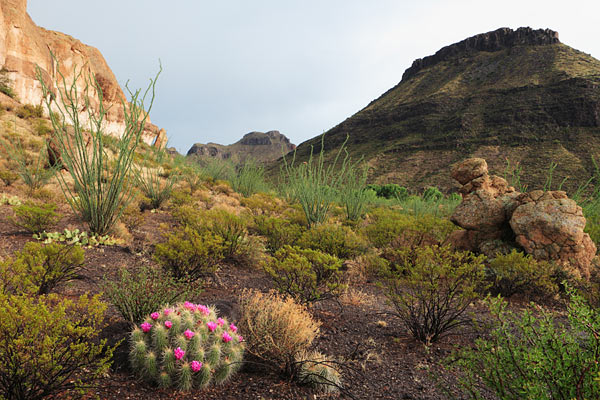
By the early 1960s native Texas bighorn sheep, which once populated 16 mountain ranges in the Trans Pecos, were gone. Unregulated hunting and disease from domestic sheep brought in by landowners did them in. But Texas Parks and Wildlife TV producer Bruce Biermann says a segment [on the TV show this month] spotlights a successful restoration project.

64—This story is called Home Again, because the bighorn sheep are finally being brought home again. For the very first time they are being released on a state park.

We show the population here it lives at Elephant Mountain. The capturing process is really interesting, with the use of helicopters.

Once they come upon a herd, they try and capture what they call family units. That’s another measure taken to increase survivability.

They use a net gun and shoot a net over the sheep, and then a guy goes down and handles the sheep and gets is shackled, blindfolded and into a bag that they then sling underneath the helicopter and bring back to processing. And then they release them out at Big Bend Ranch State Park.

Forty six sheep were captured at Elephant Mountain and released. And, of those forty-six that I know of, they’ve had three die to mountain lions. But, that’s part of the normal cycle. They’ve had many babies already born. So, the birth rate is far outgrowing the death rate. And the population is surviving and thriving.

Thanks Bruce.

The show airs this week.

The Sport Fish and Wildlife Restoration Program… funded by your purchase of fishing and hunting equipment and motor boat fuel.

For Texas Parks and Wildlife…I’m Cecilia Nasti.

Hypothermia Treatment

January 20th, 2012


This is Passport to Texas

When the wind sweeps across the wide open plains this winter, back country enthusiasts will feel it. Cold temperatures and strong winds increase the risk of hypothermia, a potentially serious condition where the body’s core temperature drops below normal. Should that happen, you need to act fast.

Dorian Drigalla (Dre-gal-a) is an assistant professor of emergency medicine at Scott and White Memorial Hospital.

51—The first thing to try to do is to get the patient to the warmest possible environment, whether that be getting them out of the wind or out of the water [if they have fallen in].

So the first two things to be concerned about on a hike or in the wilderness are basically to remove everything possible wet, get the patient dry and try and get them into a warmer environment. Even if that just means out of the wind behind shelter even of a hillside.

Then you want to try additional measures, whether that’s using insulating materials like a sleeping bag or dry clothing to warm the patient and also ingestion of warm liquids can help.

If the person is cold and they’re already in water, the water between them and their clothing is actually insulating. The heat is conducted out of the body and into the water but it’s maintained between them and their clothing. And it’s only if those clothes can come off and all the water can be removed that that’s actually helpful.

That’s our show…we receive support from the Sport Fish and Wildlife Restoration Program.

For Texas Parks and Wildlife…I’m Cecilia Nasti.

Hypothermia

January 19th, 2012


This is Passport to Texas

When you’re hunting, fishing, or camping in January, remember: even though we’re in Texas, temperatures can drop well below freezing. Cold temperatures and strong winds increase the risk of hypothermia.

Dorian Drigalla (Dre-gal-a) is an assistant professor of Emergency Medicine at Scott and White Memorial Hospital.

09—Hypothermia is a condition where the body’s temperature drops below normal and certain physiologic changes happen the body because of that.

There are three stages of hypothermia that determine the severity.

41—Stage one, or mild hypothermia, is when the body’s temperature drops from what is considered normal down between 1 and 3 degrees below that.

Stage two – becomes a little bit more obvious in that the person starts to realize they are more than just cold and while they are still conscious, they do realize that they are shivering more, the shivering becomes more noticeable and the rest of the body’s movements are less coordinated. It’s at this point that the body starts to appear more pale.

Stage three is when the body temperature drops below ninety degrees. At this point, the body’s reflexes start to fail, the shivering intended in the prior two stages to help warm the body starts to fail. Concentration, speaking and thinking become more difficult.

Severe hypothermia can lead to organ failure and death.

Back country treatment of hypothermia tomorrow

That’s our show…with support from the Sport Fish and Wildlife Restoration Program.

For Texas Parks and Wildlife…I’m Cecilia Nasti.