Archive for the 'Birding' Category

Birding: Winter Hummers

Friday, December 24th, 2010

This is Passport to Texas

Fall hummingbird migration peaked in mid September, and spring migration won’t peak until February. Until then what’s a hummingbird lover to do—just wait?

08—Not at all. A lot of people will take their feeders down in October, and that’s really one of the worst things you can do, because we get hummingbirds here in Texas all year round.

Mark Klym coordinates the Hummingbird Roundup, an ongoing citizen survey of backyard hummers. Some birds, he says, arrive in late summer and stay until spring.

09—They’re not going to go down into Mexico. And so, we can keep them fed and keep them sheltered, and if we have the right habitat, we can enjoy hummingbirds 365 days a year.

You may see ruby-throats and black-chins in winter, but the Rufus and Buff bellies are more numerous in the colder months, and if your landscape has plenty of trees and shrubs, you may see some this winter. Just remember to keep your feeders refreshed and thawed.

20—During the winter, it’s a good idea to increase the number of feeders that you have. Continue with that typical, one part sugar, four parts water solution—no red food coloring, please; that’s not good for the birds. If we get a snow, which has happened a few times—yeah, you have to go out there and brush that snow off and get those feeders opened up. The birds need them; as soon as they wake up that’s where they’re going to head—for those feeders.

There’s more hummingbird information on the Texas Parks and Wildlife website.

That’s our show… For Texas Parks and Wildlife…I’m Cecilia Nasti.
Hummingbird Roundup

Friday, December 10th, 2010

This is Passport to Texas

Hear the word “roundup” and you might just think of herding cattle. But Mark Klym, who coordinates the Hummingbird Roundup, thinks of counting tiny birds.

Well, the Hummingbird Roundup is a backyard survey of hummingbirds that we do every year. You can participate at any time. You can download the forms directly off of our website, or you can send us a letter. We appreciate a donation to help with the cost, but we can send you them forms and get you started. And, so what does it mean to you as a scientist to get this kind of data back? Well it’s very important. It helps us to understand where the hummingbirds are being see, when they’re being seen. What resources they’re using. It helps us to get an idea how people are responding to them, whether they’re feeding them appropriately, and it gives us an opportunity also to learn a little bit about these hummingbirds. When the survey started, we thought we had 14 species in the state and that some of them were extremely rare. Now we’re finding that these birds are not as rare as we thought, some of them are actually nesting in Texas, and we’ve got 18 species of hummingbird in Texas. These are native non-migrating species? Well, these are all migrating species, but they’re all naturally occurring in the state of Texas.

If you’re interested in surveying these fast fliers, as Mark mentioned, you can download the Hummingbird Roundup forms from the Parks and Wildlife website.

That’s our show… For Texas Parks and Wildlife…I’m Cecilia Nasti.
Bird-friendly Coffee

Friday, November 19th, 2010

This is Passport to Texas

Coffee is an agricultural crop that thrives in the tropics.

14—These areas oftentimes are coincident with biodiversity hot spots; that is, areas of really high biodiversity, whether in birds, or insects, amphibians—what have you.

Dr. Robert Rice works with the Smithsonian Migratory Bird Center, which certifies coffees “Bird Friendly” when growers meet certain stringent criteria. Studies suggest shade grown coffee offers the greatest benefit as habitat.

15—Where coffee still is managed with a shade cover of the kind that we like to see and have defined with “bird friendly” criteria, then coffee oftentimes is some of the last remaining canopy cover—even though it’s not forest—it’s acting very much like a forest.

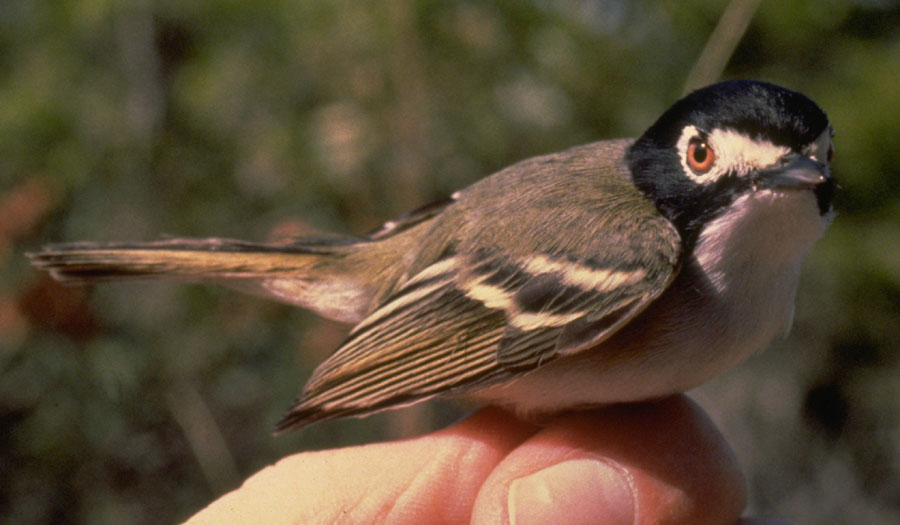
With habitat loss from deforestation, shade grown coffee estates serve as refuge for neo-tropical migratory bird species that travel through Texas, including the Black and White Warbler, the Baltimore Oriole, the Cerulean Warbler and others.

15—So, they just hang out there. They might be running around with mixed species flocks, and trying to stay alive and ultimately fatten up before they make the trip back north again. So this quality habitat becomes quite important for them in terms of making the trip back.

So next time you order a cup of coffee, you might ask your barrista if it’s for the birds.

That’s our show… For Texas Parks and Wildlife…I’m Cecilia Nasti.
Helping Whooping Cranes

Friday, November 5th, 2010

This is Passport to Texas

This month folks who reside in the Central Flyway of Texas may get a treat if they cast their gaze skyward, because whooping cranes are in migration.

18—Usually on a route down from the Muleshoe National Wildlife refuge area through the Hill Country and down to the coast. These birds are on migration so they’re on a pretty direct flight. And usually they’re moving during the day and they roost in good numbers at the various national wildlife refuges along the Central Flyway.

Mark Klym is with Wildlife Diversity. Whooping cranes are an endangered species, numbering slightly more than 260 birds—that’s up from a low of fewer than 20 animals in the early 20th Century.

Whoopers migrate in small groups of six or less, as well as on the fringes of migrating sand hill crane flocks. Klym asks that you contact him if you see these big birds along their migration path.

19—Once we’ve got a confirmation, our biologists use that to anticipate where we would see them next and try to follow them as they’re coming south to give us an idea if they’re going to run into any problems. You’ve got migratory bird hunting season at that time and we encourage the hunters to know what they’re shooting at. And, if there may be a problem, we may have to look at other actions to protect the birds.

We have the phone number for you to call to report seeing these birds at passporttotexas.org.

That’s our show…with support from the Sport Fish and Wildlife Restoration program… for Texas Parks and Wildlife …I’m Cecilia Nasti.
____________________________________________________

Whooping cranes are protected by federal and state endangered species laws, and Texans can help safeguard this national treasure by helping to prevent harm or harassment to whooping cranes. Anyone sighting a whooping crane is asked to report it to Texas Parks and Wildlife Department at (800) 792-1112, extension 4644 or alternatively at (512) 847-9480. Sightings can also be reported via e-mail at leeann.linam@tpwd.state.tx.us.

Whooping Crane Migration

Thursday, November 4th, 2010

This is Passport to Texas

This time of year when you look high overhead, you might just see whooping cranes.

10—Every year, about this time of year, we start getting emails and telephone calls from people all excited that they’ve seen whooping cranes flying over; and usually it’s between 50 and 100 birds.

But, Mark Klym, with the agency’s Wildlife Diversity program, says if you do witness a huge flock of big birds in the clouds…

07—I’m sorry, that’s not whooping cranes. Whooping Cranes never fly in a flock larger than about 10 birds, and very rarely more than six birds.

Well, maybe what you saw were sand hill cranes. Even so, North America’s biggest bird could still mingle in the mix.

05—Usually they’re off to the side. You’ll get the sand hills in a group and the whooping cranes off in a group on their own.

Whooping cranes, on the endangered species list, come through Texas’ Central Flyway this month on their way to the Aransas National Wildlife Refuge to overwinter.

15—We are optimistic that we are going to see a good population at Aransas National Wildlife Refuge. Certainly a recovery from what we saw in the past winter.

And what happened in the past winter?

Well, with the drought, we had very few blue crabs in the bays and as result suffered; we had a few losses.

If you do see whooping cranes in migration, contact Mark Klym. You’ll find his information at passporttotexas.org.

That’s our show…with support from the Sport Fish and Wildlife Restoration Program… for Texas Parks and Wildlife …I’m Cecilia Nasti.
_________________________________________________________

Whooping cranes are protected by federal and state endangered species laws, and Texans can help safeguard this national treasure by helping to prevent harm or harassment to whooping cranes. Anyone sighting a whooping crane is asked to report it to Texas Parks and Wildlife Department at (800) 792-1112, extension 4644 or, alternatively at (512) 847-9480. Sightings can also be reported via e-mail at leeann.linam@tpwd.state.tx.us.

Check out this YouTube video of whooping cranes at Aransas national Wildlife Refuge.