Archive for the 'Birding' Category

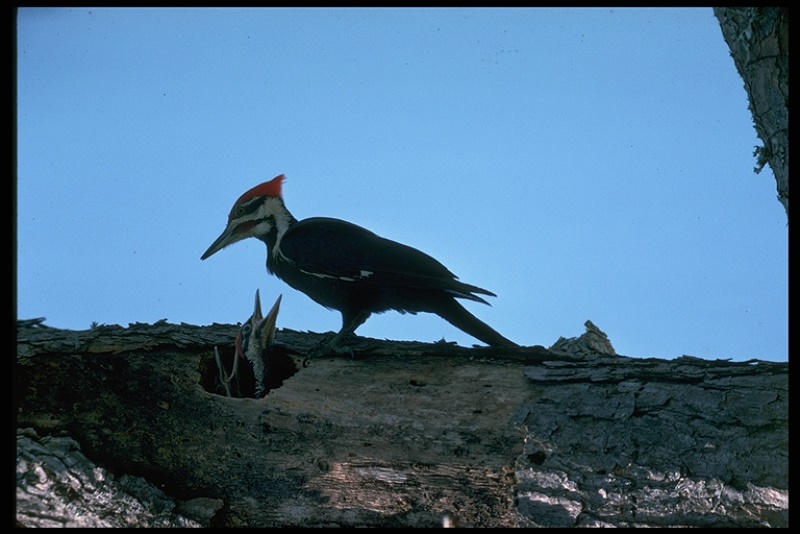
Birding Legend: Victor Emmanuel

Thursday, May 19th, 2011

This is Passport to Texas

Serious birders all know the name Victor Emanuel, founder and compiler for 50 years of the Freeport Christmas Bird Count.

Since 1976, Emanuel has operated a nature tourism company that takes people to birding hotspots around the globe. He says it all started with a desire to make his passion his work.

I’ve been interested in birds and nature ever since I was a little boy. And I always wanted to know how I could find some way to make a living doing it. And I met a man named Peter Alton who was doing it for the Massachusetts Audubon Society, and thought, well maybe I can do that. And then I had a gentleman call me and ask me to take he and his sister out birding when I lived in Houston. So, I thought there was some market for that in society. And then the National Audubon Society had their convention in New Orleans in 1975. And they asked me to plan some trips for them to Mexico. And, I had met George Plimpton through a bird count that I do down in Freeport; he introduced me to Peter Matheson. Peter Matheson went on one of my first tours as a celebrity leader. I got to know Roger Tory Peterson, who was kind of the person who developed bird watching as a hobby in the united states by his field guides. And he helped me. So, I had a lot of lucky breaks, and a lot of people joining me—friends of mine—who helped me get started.

Learn more about birding in Texas when you go to the Texas parks and Wildlife website.

The SFWR program supports our series and helps to fund the operations and management of more than 50 wildlife management areas. For Texas Parks and Wildlife…I’m Cecilia Nasti.
Look at the Birdies

Wednesday, May 18th, 2011

This is Passport to Texas

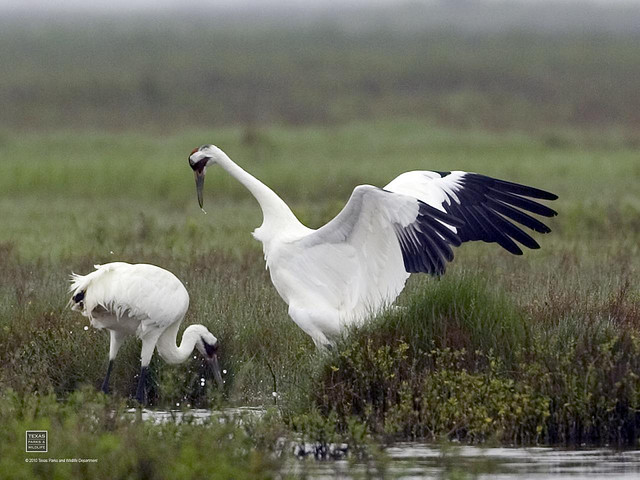
Kids spend too much time indoors in front of computer screens. But given a little encouragement and guidance, they could be willing leave the cyber world of “myspace.com” for the real world of wide open spaces.

03—It’s just a matter of taking the time to get ‘em outdoors.

Madge Lindsay is executive director of Audubon Mississippi; before that she was with Texas Parks and Wildlife, and played an instrumental role in creating the Great Texas Birding Trail, The Great Texas Birding Classic and the World Birding Center. So it comes as no surprise she advocates birding as an introductory outdoor activity.

16—All you need is a pair of binoculars and a bird book. And I’ve found that the kids really love it. They not only love the birds, but everything else in nature fascinates them. And it’s really fun to watch them as they discover something. And a lot of times this is their first trip into nature.

Lindsay says you and your kids can begin your birding adventure by stepping outside your own back door.

11—That’s the best place to start – right in your own backyard. Get a pair of binoculars, even if they’re inexpensive, something to bring them up close. Get a bird book and just start discovering your backyard birds.

To find birding opportunities near you — just log onto the Texas Parks and Wildlife Website.

The Wildlife Restoration program supports our series, providing funding for the Private Lands and Habitat Enhancement Program.

For Texas Parks and Wildlife…I’m Cecilia Nasti.
TPW Magazine: Birds and More Birds

Monday, April 25th, 2011

This is Passport to Texas

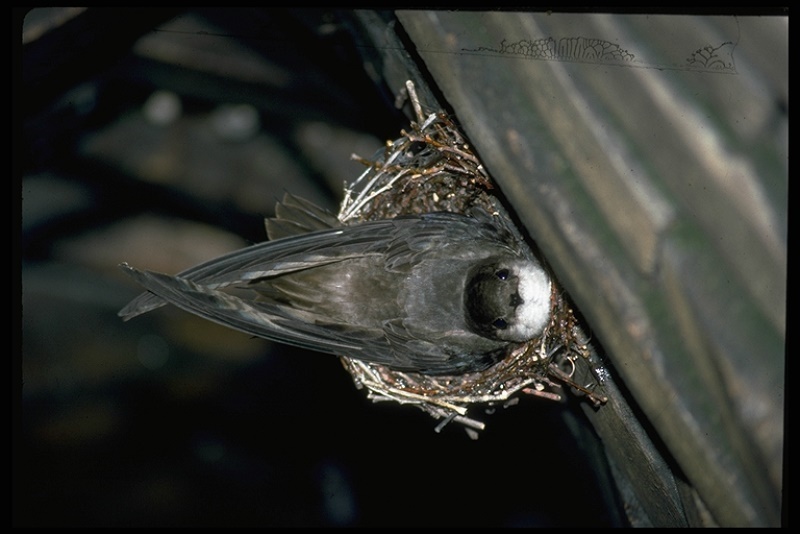
Spring has sprung, and birds are everywhere making a glorious racket. Texas Parks and Wildlife magazine Editor, Louie Bond, says the May issue captures this fine feathered fun.

63—You know, every morning you wake up and the first thing you hear are those wonderful birds singing outside our window in a buzz of activity with nest building and fledglings leaving the nest. It’s a great time of the year to get outdoors and take a look at those birds. One of the things I think we do best is bring in experts to write about what they love best. So, this month, we have a couple of experts—one who has been a regular contributor, and one who’s brand new. Our regular contributor is Noreen Damude, and she writes about her favorite birding hot spots. And these aren’t really the traditional ones; this is akin to a fisherman telling you where the best places to fish [are]. Our other writer is a new writer for us, Manny Carasco, who is a great wildlife artist, but is also an expert falconer, and trains his own birds, and takes out a variety of birds in a variety of settings for a variety of prey. And his first hand account of how that goes down is some pretty fascinating reading. We’ll also provide the birding calendar, so if you want to try it on your own, you’ll know all the great places to go in your neck of the woods, or to take a trip. So, we hope you’ll get out and bird in May.

Thanks, Louie.

Don’t miss an issue. Subscribe at www.tpwmagazine.com.

For Texas Parks and Wildlife…I’m Cecilia Nasti.
Bluebird Boxes

Friday, March 25th, 2011

This is Passport to Texas

Not all birds nest in trees.

[sfx….bluebird song]

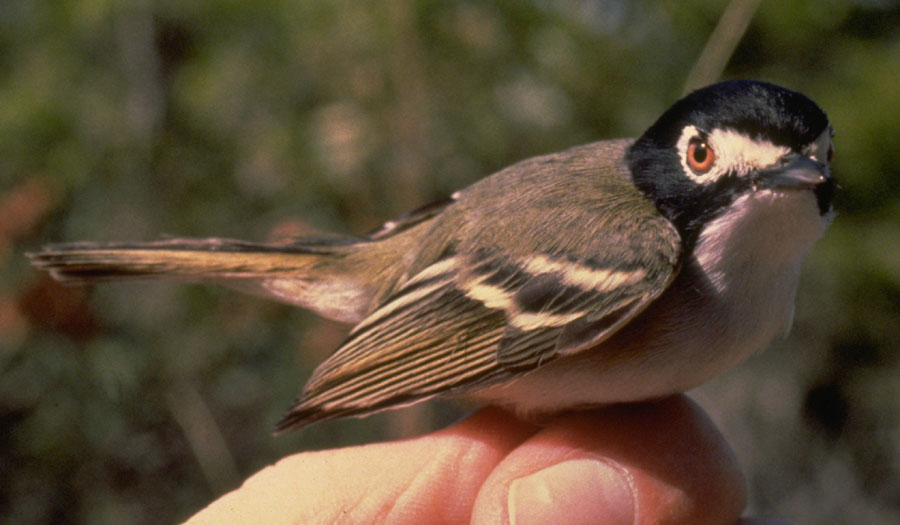
In fact, bluebirds are actually a cavity dwelling species in need of holes to build their homes. Habitat loss has diminished their housing opportunities, but bluebird enthusiasts are rolling out the welcome mat with man-made nest boxes.

16—It’s a rectangular box. In Texas we make it with a large overhanging roof, to protect from the sun. The dimensions are a little larger, that’s because our birds need more air because it’s so hot. Our birds need to be protected from the heat.

Pauline Tom is with the Texas Bluebird Society. The hole of bluebird nest box is about one and a half inches…perfect for a bluebird, not so great for a European Starling.

16—These birds came over from England in the mid 1800’s. It was like bringing fire ants in, a terrible, terrible pest. And so they’ll take the cavities that our native birds need, and they’ll actually destroy the eggs and the nestling.

For information on how to build you own nest box, log on to the Texas Parks and Wildlife web site. If you do take on the responsibility of a blue bird nest box…

09—You would clean out the nest box when the birds fledge. The nest box is used over and over.

That’s our show for today. For Texas Parks and Wildlife, I’m Cecilia Nasti.
______________________________________________________________________

Build a Bluebird House

[illustrated instructions for building a bluebird house]
Materials List

  • 1 x 10-inch lumber–33 inches.
  • 6′/2 inches of ‘/2-inch wood dowel or metal hinge.
  • One 1-1/2-inch wood screw with washer.
  • 20 to 25 l’/2 to P/t-inch nails.
  • Wire or ring-shank nails to attach box to post.

Construction Notes

  • Dimensions given are for 3/4-inch thick lumber.
  • Make entrance hole precisely l-1/2 inches in diameter and l-1/4 inches from the top.
  • Provide space between top and sides for ventilation.
  • If possible, use 1-3/4-inch galvanized siding nails or aluminum nails.
  • Round comers on bottom of box for drainage, and recess bottom 1/4-inch.
  • Roughen inside of front board by making notches with a saw or holes with an awl or drill, to assist young in climbing to entrance hole.
  • Top of the box should be attached at the back by a 1/2-inch wooden dowel or metal hinge, and in front by a 1-1/2-inch wood screw to facilitate easy opening for inspection and cleaning.
  • Drill two or three holes in the back panel of the box above and below the enclosure, to aid in quick, easy attachment to pole or post.
  • Do not add any type of perch to the box; it will only serve to attract sparrows.


Site Selection

Site selection is the single most important step in having a successful bluebird program. Bluebirds utilize only a very specific type of habitat for nesting and only rarely will deviate from it. In general, bluebirds prefer open areas with scattered trees where the ground is not covered with tall undergrowth.

There are three general areas that should be avoided when selecting a nest site:

  1. Avoid placing nest boxes in towns or within the immediate area of farm yards. House sparrows invariably will occupy every such nest box.
  2. Do not place boxes in heavy timber. Bluebirds prefer sites associated with timber, but more at the edge of a clearing rather than in the timber stand itself.
  3. Do not place boxes in or near areas of widespread insecticide use. Bluebirds feed almost entirely on insects during the nesting season.

Installation and Maintenance

  • Place boxes at 150- to 200-yard intervals.
  • Mount boxes about five to seven feet above ground level. Fence posts make excellent mounting sites.
  • Clean boxes as soon as possible after a successful hatch. Bluebirds will not utilize the same nest box unless it is cleaned.

TPW TV: For the Birds

Tuesday, March 1st, 2011

This is Passport to Texas

Texas is home to hundreds of bird species, and Texas Parks and Wildlife TV Producer, Alan Fisher, explains how a couple of segments in March programming are for the birds.

We are featuring a story on quail—Northern Bobwhite quail are in decline across the US, faring better in Texas than some places, but it’s still a concern. Um, and we meet with some landowners and biologists who are trying to help the quail stay around.

Across the south, the Bobwhite populations have been declining for several decades.

As with most birds, the quail question is really a question of habitat.

Quail need to have a place where they can roost, and they need a place to rest, and they need a place for cover from hawks or any other type of predator.

I’d like to welcome you all to Estero Llano Grande State Park…

The World Birding Center locations in the Rio Grande Valley are some of the best places to view birds anywhere in America. And there are nine parks that make up the World Birding center, and Estero Llano Grande is going to be featured in the end of March.

In the park, we have approximately 216 bird species recorded. On just a regular day, you can sit on this deck for an hour or two, and easily spot 30-40 species of birds.

It’s a small park with a whole mess of birds.

Thanks, Alan.

That’s our show… with support from the Sport Fish and Wildlife Restoration Program…providing funding for boat ramps in Texas.

For Texas Parks and Wildlife…I’m Cecilia Nasti.