Archive for the 'Land/Water Plan' Category

Texas in Your Inbox

Wednesday, March 9th, 2011

This is Passport to Texas

09—This is like the inside scoop that you can get. And it’s really great for us because it’s incredibly cost effective; we don’t have to spend a lot of dollars, and yet we’re able to reach thousands of people.

That’s Darcy Bontempo, Marketing Director at Texas Parks and Wildlife. She’s referring to the agency’s free email newsletters that highlight a diverse array of outdoor activities throughout the state.

17—These are wonderful multimedia e-newsletters. If you’re someone who loves state parks, you can sign up for our State Parks Getaways. We’ve also got a Fish Texas newsletter, we’ve got a Hunt Texas, and we also have something that appeals to someone who loves all kinds of outdoor activities as well as conservation, and that’s called our Life’s better Outside e-newsletter.

It’s easy to sign up to receive the free e-newsletters just go to the Texas Parks and Wildlife homepage, and click the icon that says “sign up for email updates.” When you do, the great Texas outdoors comes to you.

23—For example in March we’ll be having a newsletter that will cover everything from Bighorn Sheep release in Big Bend; you’ll get to see the video of that, which is just really exciting. You’ll also see a story about the wildlife trails that were just completed. Perfect time of the year, spring migration, go out with your family or your friends and see wildlife. And also, you’ll get to see a teaser on The State of the Gulf, which is a wonderful TV documentary we just completed airing on PBS.

Texas delivered to your inbox—it doesn’t get much better than that.

That’s our show for today… For Texas Parks and Wildlife…I’m Cecilia Nasti

Bighorn Sheep Restoration

Wednesday, March 2nd, 2011

This is Passport to Texas

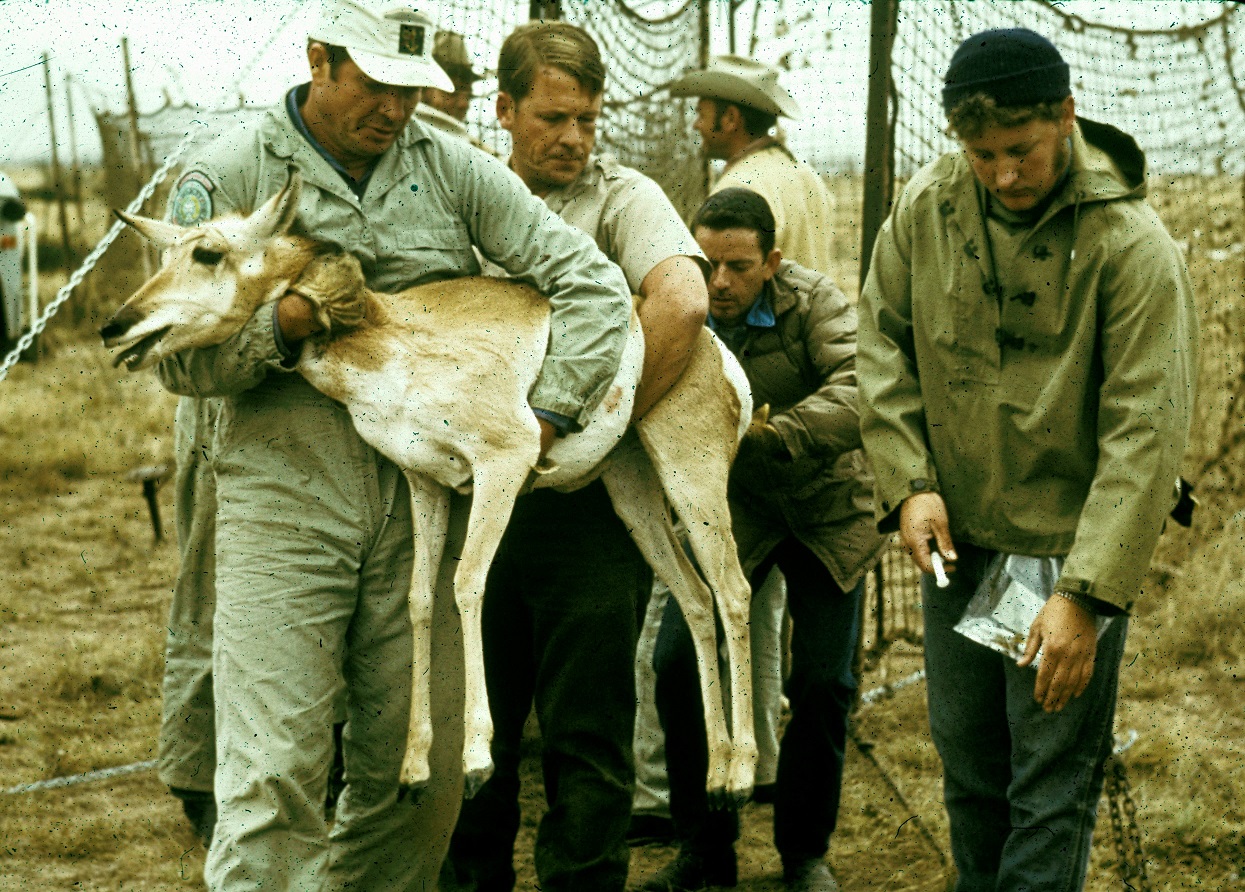
The Wildlife and State Parks Divisions teamed up to make history in December 2010 with the reintroduction of desert bighorn sheep at Big Bend Ranch State Park.

13—Today is a historic day for the wildlife division and state parks, because this is one of our more significant wildlife conservation efforts, where we’re collaborating with state parks to reintroduce a species that hasn’t been here in decades.

Clayton Wolf is Wildlife Division Director. Using a helicopter and nets, biologists removed animals from Elephant Mountain Wildlife Management Area, and transported them by trailer to Big Bend Ranch, about an hour and a half away.

20—[helicopter] We’re capturing bighorn sheep, of course, and we’re transplanting them to Big Bend Ranch State Park. They’re part of our natural history out here in West Texas. They were here long before any of us showed up. They’re part of the natural ecosystem out there, and of course, that’s part of our mission to restore those species that have been out here. And, of course, bighorn sheep they’re a flagship species for these mountains.

The animals underwent testing, and most were fitted with radio transmitters, to track them over time.

11—Our bighorn sheep restoration program has been very successful. So, this is just one of those steps in the process. There’s a lot of other private land tracts and public land tracts we hope to restore sheep to one day.

Watch the bighorn sheep relocation effort when you log onto the Texas Parks and Wildlife YouTube channel.

That’s our show… with support from the Wildlife Restoration Program… funding bighorn sheep restoration work in Texas.

For Texas Parks and Wildlife…I’m Cecilia Nasti.

Water Access in Texas, 2

Friday, February 25th, 2011

This is Passport to Texas

02—if they can’t get out there, they won’t get out there.

Ron Smith is talking about water. He’s the River Information Specialist for Texas. Helping you access water for recreation purposes is among Parks and Wildlife’s top priorities.

12—Our main initiatives include healthy outdoor activities, conservation initiatives, and getting folks out there so we can outreach to them, and so they can relax and enjoy the great outdoors.

Smith has traveled statewide for the better part of a decade identifying and characterizing public access points on rivers and lakes, putting them into a database. But he hasn’t done it alone.

23—We would not have been able to achieve a project of this level without our friends in the Law Enforcement Division. They became one of our stakeholders, and we actually held trainings to train them how to take the data. They went out to their specific counties where they were the boots on the ground and they helped us characterize and gather all these information pieces for the database.

The database contains nearly 24-hundred public water access sites; 18-hundred of those are boat ramps…

12—And about 500 of them are on rivers, and may not be boat ramps. They’re just places to slide your canoe in or get in your inner tubes.

Find out how to access the database information at passporttotexas.org.

That’s our show… with support from the Sport fish and Wildlife Restoration program…providing funding for boat ramps in Texas. For Texas Parks and Wildlife…I’m Cecilia Nasti.
________________________________________________________________

Call Ron Smith with your questions about water access in Texas at 512-389-8302.

Water Access in Texas, 1

Thursday, February 24th, 2011

This is Passport to Texas

Making it easier for you to enjoy the wide open spaces is a big part of our job at Parks and Wildlife, and we take it seriously. You like spending time on the water, so we’ve made it our business to locate and document public water access points across the state.

15—What we tried to do is characterize these access points, because there are many different uses—whether you’re going to try to swim there, fish there, what you can launch there. Are they accessible during low water events, high water events? All kinds of different things.

Ron Smith is the River Information Specialist for the state of Texas.

30—About seven years ago we started trying to get a database together on where is the public water access in the state of Texas. And what we ended up with is the database that contains about 24-hundred public water access sites. About 18-hundred of those are boat ramps located all over the state, and about 500 of them are on the rivers, and may not be boat ramps; they’re just places to slide your canoe in, or get in with our inner tube. You wouldn’t be able to launch a “trailerable” boat at those locations.

Ninety-five percent of Texas land is in private hands, making these pubic access points all the more valuable. Tomorrow: collecting the information.

03—We actually held trainings to train them how to take the data.

That’s our show… with support from the Sport Fish and Wildlife Restoration program…providing funding for boat ramps in Texas.

For Texas Parks and Wildlife…I’m Cecilia Nasti.

_______________________________________________________

If you have a question about water access points near you, contact Ron Smith at 512-389-8302.

The State of the Gulf–America’s Sea, 2

Wednesday, February 16th, 2011

This is Passport to Texas

Dr. Larry McKinney isn’t shy about sharing his affection for the Gulf of Mexico.

19—It is one of the most beautiful places in the world…when you get out into the gulf, be it in the Laguna Madre, or the coral reefs of the Flower Gardens, or the Florida Keys, or the area off the Mississippi River where you see huge pods of whale—we even have giant squid. It’s an incredibly beautiful place, biodiverse and productive. It’s a hidden treasure, and it’s well worth our protecting.

McKinney is the Executive Director of the Harte Research Institute for Gulf of Mexico Studies, at Corpus Christi, Texas A & M, and appears in this month’s hour-long TPW PBS documentary The State of the Gulf-America’s Sea.

14—I think this upcoming documentary on the Gulf, will give individuals a framework to learn about the Gulf, and will hopefully pique their interest to go and learn more. But it’s a wonderful coverage of all the aspects of the Gulf of Mexico that makes it important to all of us.

These aspects include environmental, economic and recreational value. To fully understand and appreciate the resource, you have to engage the Gulf.

14—Go fishing, boating, swimming. Go to the beaches, go to our parks that surround the gulf—certainly there are some wonderful ones here in Texas. Get out into that environment, and you’ll see why it’s worth protecting, and I think you’ll take the actions that are necessary to make sure we have it, not only for us, but for our kids.

The State of the Gulf-America’s Sea airs on most Texas PBS stations February 24, Check your local listings.

That’s our show…with support from the Sport Fish and Wildlife Restoration Program…supporting conservation efforts in Texas. For Texas Parks and Wildlife…I’m Cecilia Nasti.