Archive for the 'Land/Water Plan' Category

Conservation: Conserving Water in Texas

Wednesday, July 6th, 2011

This is Passport to Texas

Legislators, alone, cannot ensure a future that provides an abundant supply of water for humans, fish and wildlife.

This month, as we observe the 10th anniversary of Texas Parks and Wildlife magazine’s water issue, Executive Director, Carter Smith, reminds us that all Texans have a role to play when it comes to conserving this vital resource.

We all miss water when it’s not around. And ultimately we have to plan for those kinds of scenarios, and remember that the future of our water is a generational one.

But it’s also a very personal one.

And every one of us can take responsible actions to help contribute to the future health of our water. It doesn’t matter where we live. Big cities or small cities, in the countryside or in a suburban neighborhood.

We can make choices with respect to how much water we use, what kind of appliances we choose to buy, what kind of grass we plant in our yard, the vegetation that we choose; making sure that water is not needlessly running off into our storm drains and into our rivers and creeks and streams.

And so, these are important things that every one of us as a citizen and steward can take to help ensure the vitality of this water for the future.

Go to texasthestateofwater.org for more information.

The Sport Fish and Wildlife Restoration Supports our program….and funds conservation projects in Texas.

For Texas Parks and Wildlife…I’m Cecilia Nasti.
Artificial Reefs

Monday, June 27th, 2011

This is Passport to Texas

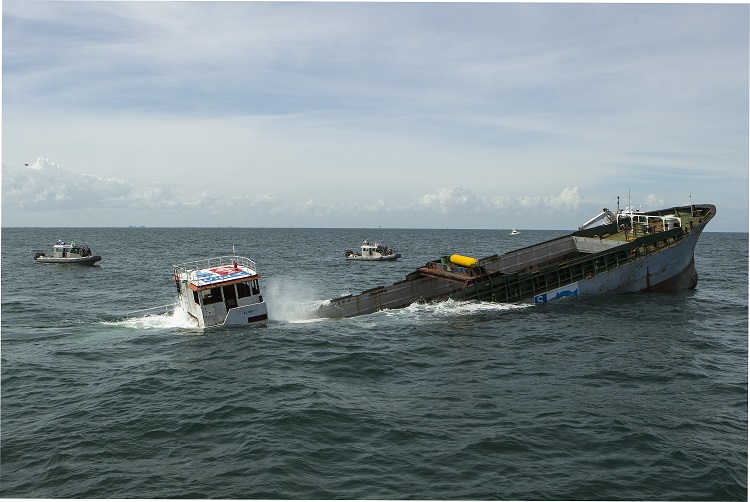
An artificial reef is marine habitat created by man and placed on the ocean bottom for the benefit of marine life.

12—Nature has a way of providing its own habitat, but in the case of the Gulf of Mexico – offshore Texas – most of the substrate is soft, murky, muddy, and there’s very little hard substrate out there.

Dale Shively coordinates the artificial reef program for Texas Parks and Wildlife. He says that hard substrate is necessary for the development of reefs. What’s fascinating is that once they deploy the substrate material, within days marine life begins attaching to it.

10—In a very short period of time, the substrate is covered with barnacles and sponges and some types of coral. And that begins the basis of the food web as we know it.

Without artificial reefs in the Gulf of Mexico, the waters wouldn’t be nearly as productive and vital as they are.

All kinds of items end up on the bottom of the gulf as artificial reefs: from oil rigs to concrete rubble to decommissioned battleships.

But what does any of this mean to the average Texan? Why should we care about this effort to create artificial reefs?

13—The importance of the reef program is, number one: preserve and enhance the marine environment. And by doing that, we also create fishing and diving opportunities for not only Texans, but also citizens throughout the US.

That’s our show for today…we receive support from the Sport Fish Restoration Program… funded by your purchase of fishing equipment and motor boat fuels.

For Texas Parks and Wildlife…I’m Cecilia Nasti.
No Flow With Which to Go

Thursday, June 23rd, 2011

This is Passport to Texas

11—Anyone who recalls the aerial photographs of the Rio Grande not reaching the gulf of Mexico several years ago, should take that as a wake-up call.

Andrew Sansom, Director of the River Systems Institute at Texas State University in San Marcos, contributes the article Keeping Rivers Flowing, in Texas Parks and Wildlife magazine’s tenth anniversary water issue, on newsstands now.

17—People tend to believe everything’s okay as long as the water comes out when they turn on the tap. So, by bringing people’s attention to the issues presented to us from the aquifers to the estuaries, we do a great service.

Sansom suggests that unless we change how we think about and use water, we could—in our lifetimes —unintentionally “dewater” some of the state’s most iconic and biologically diverse rivers.

16—Everything is connected. People don’t often grasp the reality that when we approve hundreds of new wells in the hill country we potentially adversely affect the estuaries on the rim of the Gulf of Mexico.

It is with the utmost urgency that we begin to think beyond our own faucets, says Sansom, and understand that up steam and downstream—the headwaters and the tidewaters—are all part of the same cycle…or flow…of life.

The Sport Fish and Wildlife Restoration Program funds our series…and supports conservation of Texas’ natural resources.

For Texas Parks and Wildlife…I’m Cecilia Nasti.

Water: We Must Act Now

Wednesday, June 22nd, 2011

This is Passport to Texas

A lot can change in 10 years, but one constant is Texas Parks and Wildlife magazine’s annual water issue. Dr. Larry McKinney, Director of the Harte Research Institute, and former Director of Aquatic Resources at Parks and Wildlife, has been involved from the beginning.

14—When we wrote the first article in that series, we were in the middle of just trying to get the Texas Legislature to come up with a method for including environmental issues—and all the other concerns—for evaluating water needs in the state of Texas.

Dr. McKinney says although we’ve made progress since that first issue, we’ve further to go to solve the problem.

17—I think now, more and more people understand that we have to have water for the environment; I hear that from our political leaders. I see a commitment in our legislature to move in the right direction. So, it’s all positive. The question is: can we move quickly enough to make sure that we hit that balance before we get into a situation where the options are very, very limited.

How much time does Texas have to achieve a balance between human and environmental water needs?

14—We have to solve this within the next ten years, because by then the population will have reached such a level that our options to balance the environmental water needs with industry and agriculture and municipalities will be frankly gone. We will not have another chance.

Go to texasthestateofwater.org for more information.

The Sport Fish and Wildlife Restoration Program funds our series…and supports conservation of Texas’ natural resources.

For Texas Parks and Wildlife…I’m Cecilia Nasti.

TPW TV: Lone Star Land Stewards

Thursday, June 2nd, 2011

This is Passport to Texas

Texas Parks and Wildlife recognizes private landowners who demonstrate outstanding stewardship with the Lone Star Land Steward Awards. Meet these dedicated men and women in June on the Texas Parks and Wildlife TV series. Producer, Don Cash.

57—One of the award winners that we’re going to look at is the Duval County Ranch in the South Texas Plains. And this ranch has had over a hundred years of being heavily overgrazed.

My first management decision was to remove the cattle to let the ranch start healing and today we’re running over 2,000 head of cattle on it. We use them as tools to better the habitat.

We’re also going to have a look at the Mott Creek Ranch in the Rolling Plains and not only have they done a lot of work to restore the land, but they’ve got some archeological sites that they have school kids come in and help excavate.

Her allowing us to do this has been a great help to us. And these kids, when they go back to school, they talk about what they’ve done. And we’re kind of putting a message out there about landowners protecting their sites.

These are just a couple of examples of landowners doing the right thing by their land. And we’ve got a Lone Star Land Steward winner every week this month on the television show.

Thanks, Don

Check your local listings.

For Texas Parks and Wildlife…I’m Cecilia Nasti.